
Oct 25 2026


The peoples of Palestine and Israel, in order to establish peace and prosperity among the peoples of Palestine and Israel, establish justice, ensure domestic tranquility, promote the general welfare, and secure liberty for ourselves and our posterity, do ordain and establish this Constitution for the Israeli Palestinian Confederation.
The Israeli Palestinian Confederation serves as a government of the people to resolve conflicts and develop into the future in a fair and equitable manner.
Palestinians and Israelis are entitled to live at peace and enjoy liberty, the pursuit of happiness, justice and self-determination.
Palestinians and Israelis are entitled to equal rights under the law, and guaranteed human rights and freedom.
The creation of a Confederation is consistent with the aspirations of the peoples of Palestine and Israel. The Israeli Palestinian Confederation does not intend to supersede or supplant the Palestinian or Israeli Governments, nor to abrogate or undermine any agreements between those governments.
The principles stated above shall be pursued through a mutual confederation committed to fair representation of both the Israeli and Palestinian peoples and to the pursuit of consensus in accordance with the principles of confederation. This Preamble shall constitute an integral part of this Constitution.
Section 1. All legislative powers herein granted shall be vested in the Parliament of the Israeli Palestinian Confederation, which shall consist of a combined 300 Palestinian and Israeli Representatives within Israel and Palestine. Said Parliament shall be called: The Israeli Palestinian Parliament. For the purpose of conducting the first election, districts shall be confirmed by the Founding Committee prior to the elections.
Section 2. The Founding Committee shall prescribe the time, place, and manner of the first elections for the Confederation, as well as the time, place, and manner in which the first Parliament shall conduct its legislative sessions and voting procedures. Such commencement shall occur only after at least one hundred (100) Members of Parliament have been elected, including not fewer than forty (40) Palestinian members and forty (40) Israeli members.
Section 3. After the first election, the 300 electoral districts shall be established by an Independent Committee composed of Israelis and Palestinians who meet the eligibility requirements to vote in the election and who are not candidates for the Israeli Palestinian Confederation or its Parliament. The Independent Committee shall be appointed in accordance with the “Appointment Clause” of this Constitution and shall have the duty and responsibility to ensure fair and free elections, as prescribed by Parliament and consistent with this Constitution.
Section 4. Districts shall be drawn randomly based on population. Districts may be drawn in blocks, to combine several districts, or may be drawn individually and distinctly to accommodate the individual location of a particular geographic location.
Section 5. The Founding committee shall announce the districts at least 120 days prior to the election for the Israeli Palestinian Parliament. Districts may change at each election to reflect a change in geography or population. The committee shall attempt to assign districts to reflect the entire population, as well as all geographic locations in their entirety. Said committee shall be allowed sufficient latitude in drawing the districts to promote practical and efficient innovation to accommodate free and fair elections.
Section 6. In the event that any electoral district has not yet elected a Parliament member by the deadline set by the Founding Committee, elections in those districts may continue or suspended at the discretion of the Founding Committee to facilitate necessary methods to elect or appoint the remaining Parliament members. Any legislation duly enacted by the elected Parliament members shall remain valid and enforceable notwithstanding the absence of representation from certain districts, and all such laws shall remain in full force and effect, subject to the provisions of this Constitution.
Section 7. No bill affecting the sovereignty of the governments or authorities of the geographic areas commonly known as Israel or Palestine shall become law unless at least fifty-five percent (55%) of the Palestinian Members of Parliament and at least fifty-five percent (55%) of the Israeli Members of Parliament have voted in favor thereof, and unless the respective Israeli and Palestinian governments or authorities, and the separate Israeli and Palestinian recognized legislative bodies, have been afforded a fair and reasonable opportunity to veto such bill. Such legislation shall not become law if the respective governments or authorities, or legislative bodies, veto the legislation within the period prescribed by the bill.
Section 8. No bill shall prescribe a period of less than thirty (30) days unless such bill is declared an emergency measure and unless a fair and reasonable opportunity is afforded to the Israeli and Palestinian governments or authorities, and their respective recognized legislative bodies, to veto such legislation. The proponent of any law, bill, or resolution in Parliament shall establish a clear voting deadline, and the voting period shall be communicated to all Members of Parliament at least twenty-four (24) hours in advance. No bill shall become law unless at least one hundred (100) Members of Parliament have voted, including not fewer than forty (40) Israeli members and forty (40) Palestinian members voting in favor thereof.
Section 9. With respect to veto power conferred upon the Israeli and/or Palestinian governments or authorities, such veto power may be exercised individually or jointly with respect to any legislation enacted by the Israeli Palestinian Confederation Parliament that affects their respective sovereignty or requires their active participation for its implementation.
Section 10. The determination of whether legislation affects the sovereignty of the Israeli or Palestinian governments or authorities, or requires their participation as indispensable governing authorities, shall be made by the Israeli Palestinian Confederation Parliament as part of the statute or law being proposed. If the respective Israeli or Palestinian governments, recognized authorities, or legislative bodies do not exist, the requirement for veto power by such entities shall be deemed waived.
Section 11. Prior to the implementation of any law that affects the sovereignty of the Palestinian or Israeli governments or their authorities, the Israeli Palestinian Confederation shall obtain an approved petition from the affected government or authority authorizing the enforcement of such law.
Section 12. Laws not affecting the sovereignty of the Israeli or Palestinian governments or authorities may be enacted upon a fifty-five percent (55%) vote of both the Palestinian and Israeli Members of Parliament and shall not be subject to veto by the Israeli or Palestinian governments or authorities, or their recognized legislative bodies.
Section 13. The Israeli Palestinian Confederation Parliament shall be composed of members elected every four (4) years by the people of the several districts. Such elections shall take place within the geographic areas commonly known as Israel and Palestine. Persons eligible to vote must hold citizenship in Israel or Palestine, as recognized by the respective Israeli or Palestinian governments or authorities, must have attained the age of eighteen (18) years, and must be physically present within Israel or Palestine at the time of voting.
Section 14. A candidate for Parliament shall be deemed duly elected from a district or group of districts upon receiving the required threshold of votes by the election deadline, as determined by the Founding Committee. If no candidate meets the required threshold, the respective district shall temporarily remain unrepresented in Parliament. Notwithstanding the foregoing, eligible voters within such district or group of districts may continue to cast votes beyond the deadline until the threshold requirement is satisfied. Notwithstanding the foregoing, Members of Parliament who have already been elected by the prescribed deadline shall have the authority, upon the affirmative vote of at least fifty-five percent (55%) of the Israeli Members of Parliament and fifty-five percent (55%) of the Palestinian Members of Parliament then elected, to suspend or terminate the election process in any district that has failed to elect a representative, and to appoint a temporary or permanent Member of Parliament residing in such district to serve as its representative, subject to this Constitution.
Section 15. Any candidate who is elected or appointed after the official swearing-in of Parliament shall serve for the remainder of the parliamentary term.
Section 16. A person may be elected or appointed to Parliament provided that he or she has attained the age of twenty-one (21) years at the time of registration or appointment, is a citizen of Palestine or Israel, and is an inhabitant of, has resided in, originates from, or maintains a substantial connection to the district from which he or she is elected. A person who has been displaced, relocated, forced to leave, or whose precise residence cannot reasonably be identified due to the size, conditions, or circumstances of the district shall not be disqualified from election or appointment, provided that such person can demonstrate a bona fide connection to the district.
Section 17. All members of Parliament shall declare their affiliated citizenship and delegation upon the announcement of their candidacy or appointment. A person holding both Israeli and Palestinian citizenship shall designate, at the time of candidacy or appointment, whether he or she shall be counted as a member of the Israeli or Palestinian delegation. Upon election or appointment, each member shall be counted as a member of the delegation corresponding to such declaration and shall remain a member of that delegation until the expiration of his or her term, notwithstanding any additional citizenship held or subsequently acquired.
Section 18. No individual may stand as a candidate for both President and Parliament in the same election cycle. No individual shall simultaneously hold elected office in both the Parliament and the executive branch of the Israeli Palestinian Confederation.
Section 19. Except for the first elections, the election for the Israeli Palestinian Confederation and the Israeli Palestinian Parliament shall take place at least 30 days prior to the expiration of the term of the Israeli Palestinian Confederation Parliament members.
Section 20. When a vacancy occurs in a district, the candidate who received the next highest number of votes in that district shall succeed to the office. If no such candidate exists, the delegation to which the vacant representative belonged shall appoint a replacement representative.
Section 21. Each Parliament member of the Israeli Palestinian Confederation shall take the following oath prior to entering their office as legislators:
“I do solemnly swear (or affirm) that I will faithfully execute my duties as a Legislator for the Israeli Palestinian Parliament, and will to the best of my ability, preserve, protect and defend the Constitution of the Israeli Palestinian Confederation.”
Section 22. Parliament members of the Israeli Palestinian Confederation shall be elected for a period of four (4) years, and each parliament member shall have one vote. Parliament members shall not serve and shall not be elected for more than 12 years or three terms, whichever is greater.
Section 23. The Israeli Palestinian Confederation Parliament shall have the sole power to try and impeach the President and the Vice President, as well as any parliament members or officers and judges of the Confederation. When convening for that purpose, they shall be on oath or affirmation. When any Confederation Government member is tried, one Israeli and one Palestinian Parliament member of the Confederation shall preside. No person shall be impeached unless 55 percent of the Israeli and 55 percent of the Palestinian Parliament members have voted for the same article of impeachment. No person shall be convicted unless 65 percent of the Israeli and 65 percent of the Palestinian Parliament members have voted to convict on the same article.
Section 24. Judgment in cases of impeachment shall not extend beyond removal from office, and disqualification to hold and enjoy any office of honor, trust or profit under the Israeli Palestinian Confederation; but the party convicted shall nevertheless be liable and subject to indictment, trial, judgment and punishment, according to law.
Section 25. The Parliament shall be the judge of the elections, returns and qualifications of its own members.
Section 26. The parliament may determine the rules of its proceedings and punish its members for disorderly behavior.
Section 27. The Parliament shall keep a journal of its proceedings, and from time to time publish the same, and the yeas and nays of the members on any question shall be entered into the journal. The proceedings of the Parliament shall be open to the public, and its proceedings published and available to the public.
Section 28. The Parliament members may receive compensation for their services, to be ascertained by law, and paid out of the treasury of the Israeli Palestinian Confederation.
Section 29. Parliament members shall, in all cases except for treason, felony, and breach of the peace, be privileged from arrest by the Israeli Palestinian Confederation during their attendance at the Parliament, and in going to and returning from the same; and for any speech or debate, they shall not be questioned in any other place.
Section 30. No member of the Israeli Palestinian Confederation Parliament shall simultaneously serve as a member of the Israeli or Palestinian governments or authorities, or of their legislative or judicial bodies, armed forces, or police forces.
Section 31. The first Parliament shall ratify the Constitution of the Israeli Palestinian Confederation in its present form. Any subsequent amendment to the Constitution shall require the approval of sixty-five percent of the Israeli members of Parliament and sixty-five percent of the Palestinian members of Parliament of the Israeli Palestinian Confederation. The Constitution of the Israeli Palestinian Confederation shall not be subject to veto by the Israeli or Palestinian governments.
Section 32. In the event of a conflict between the laws of either the Israeli or Palestinian governments and those of the Israeli Palestinian Confederation, precedence shall be given to the laws of the respective Israeli or Palestinian governments, unless those laws abolish or restrict the authority of the Israeli Palestinian Confederation government.
Section 33. Any treaty entered into between the Israeli government or authorities and the Palestinian government or authorities shall be recognized and upheld by the Israeli Palestinian Confederation government, provided that no such treaty shall abolish, restrict, or impair the authority of the Confederation government.
Section 34. The Representatives of the Israeli Palestinian Confederation Government shall be bound by oath or affirmation to support the Constitution; but no religious test shall ever be required as a qualification for any office or public trust under the Israeli Palestinian Confederation.
Section 35. The Israeli Palestinian Confederation shall make no law respecting an establishment of religion or prohibiting the free exercise thereof; or abridging the freedom of speech, or of the press; or the right of the people peaceably to assemble, and to petition the government for redress of grievances.
Section 36. All people shall have the right to be secure in their bodies, homes, documents, and personal property against unreasonable searches and seizures. This right shall not be violated. No warrant shall be issued except upon probable cause, supported by oath or affirmation, and specifying with particularity the place to be searched and the persons or items to be seized.
Section 37. No person shall be compelled, in any criminal investigation or proceeding, to testify against themselves. Every individual has the right to remain silent, and no adverse inference shall be drawn from the exercise of this right.
Section 38. No person shall be tried or punished more than once for the same offense. No individual shall be deprived of life, liberty, or property except through fair and impartial due process of law. Private property shall not be taken for public use without the provision of just and equitable compensation.
Section 39. Every person accused of a criminal offense shall have the right to a speedy and public trial before an impartial tribunal. All accused people shall be promptly informed of the charges against them, shall have the right to confront and question the witnesses presented against them, and shall have the right to obtain and present witnesses in their defense. Every accused person shall have the right to legal counsel, and counsel shall be provided at public expense for those unable to afford it.
Section 40. No person shall be subjected to cruel, inhuman, or unusual punishment. Excessive bail shall not be required, nor shall excessive fines be imposed.
Section 41. All debts contracted and obligations entered by the Founding Committee, before the adoption of this Constitution, shall be as valid against the Israeli Palestinian Confederation.
Section 42. Appointment Clause — With the exception of the Founding Committee, no committee or judicial panel shall be appointed unless an equal number of Palestinian and Israeli members are appointed. No person who, at the time of appointment, is a member of the Israeli or Palestinian governments or authorities, or of their legislative bodies, judiciary, armed forces, or police forces, shall be eligible for appointment. No committee member, judicial officer, or executive appointed on behalf of the Israeli Palestinian Confederation shall assume office unless he or she has taken the same oath required of the appointing authority.
Section 43. The Israeli Palestinian Confederation Parliament may override any veto issued by the President of the Confederation upon the affirmative vote of sixty-five percent (65%) of the Israeli members and sixty-five percent (65%) of the Palestinian members of Parliament. The Israeli Palestinian Confederation shall not override any veto issued by the Israeli or Palestinian governments or authorities, or by their respective legislative bodies. The Israeli Palestinian Confederation Parliament may, however, invalidate or prohibit any law enacted by the Israeli or Palestinian governments, authorities, or legislative bodies that seeks to dismantle, abolish, or materially undermine the Israeli Palestinian Confederation or any of its institutions.
Section 44. This Constitution shall be interpreted based on its English language version. All statutes enacted by the Parliament shall be drafted and published in English, Arabic, and Hebrew, each version having equal legal force and effect. Any person charged with a criminal offense under a statute shall be provided with the formal charges and relevant legal documentation in the language determined by the appropriate legal authority.
Section 45. Elections shall be conducted in the most convenient manner, including the internet to accommodate the needs of the Israeli and Palestinian people.
Section 46. The Israeli Palestinian Confederation government shall be sworn into office as soon as practicable after the election results have been certified by the Founding Committee. All members of the Confederation shall take an oath or affirmation of office, which may be administered verbally, in writing, or in any other manner sufficient to establish a meaningful communication and acknowledgment of such oath or affirmation.
Section 47. Any member of the Israeli Palestinian Confederation who was elected in special elections or appointed for office shall serve until the next general elections, and if qualified, may run at any subsequent elections.
Section 48. If a Parliament member is sworn in, elected, or appointed after the original commencement date, his or her term in office shall, for all purposes, be deemed to have begun on the original commencement date.
Section 49. The Founding Committee, at its discretion, may extend or suspend the election period, provide for a runoff election between the leading parliamentary and presidential candidates, and determine the threshold of votes required for the election of Parliament members, as well as the President and Vice-President.
Section 50. The Israeli Palestinian Confederation Parliament shall have the authority, upon the affirmative vote of fifty-five percent (55%) of the Israeli members and fifty-five percent (55%) of the Palestinian members of Parliament, to declare any veto issued by the Israeli or Palestinian governments or authorities, or by their legislative bodies or judiciary, to be a “Sham Veto,” and may vote to disregard such veto. A “Sham Veto” means a veto that failed to comply with the issuing government’s, authority’s, legislative bodies, or judiciary’s own procedural or substantive legal standards.
Section 1. The executive power of the Israeli Palestinian Confederation shall be vested in a President and Vice President of the Israeli Palestinian Confederation. The President shall hold his or her office during the term of two (2) years and shall alternate at the expiration of the two years with the Vice President, who will become the President in the second two years of the term, at which point the previous President shall become Vice President. Said President and Vice President shall be citizens and inhabitants of Israel or Palestine.
Section 2. The President and Vice President shall be elected during the general elections held at the same time as the elections for Parliament of the Confederation. The candidates who obtain the most votes by the election deadline from the entire pool of voters in Israel/Palestine shall be President for the first two years. The Vice President shall be of a different citizenship from the person elected President. The person who is of a different citizenship of the elected president who received the second largest number of votes by the election deadline from the entire pool of voters in Israel/Palestine shall be the Vice President.
Section 3. No person shall be elected to the office of President or Vice-President unless the total number of voters participating in the general election by the prescribed deadline meets the minimum threshold established by the Founding Committee.
Section 4. In the event that a President and Vice-President have not been elected by the prescribed deadline, and provided that at least forty (40) Israeli Members of Parliament and forty (40) Palestinian Members of Parliament have been elected by such deadline, the Members of Parliament so elected shall have the authority, upon the affirmative vote of at least fifty-five percent (55%) of the Israeli Members of Parliament and fifty-five percent (55%) of the Palestinian Members of Parliament then elected, to appoint a temporary or permanent President and/or Vice-President who meets all constitutional qualifications to serve in such office.
Section 5. The President shall have the power to veto legislation passed by the Confederation Parliament at any time prior to a veto issued by the separate Israeli or Palestinian Governments. However, the Parliament shall also have the power to overturn such veto upon a vote of 65% of the Palestinian and 65% of the Israeli Parliament members.
Section 6. The President may issue executive orders which will be in effect for a period of 120 days, to facilitate both his or her, and the Vice President’s executive duties. Said orders shall conform to duties bestowed upon him or her by this Constitution or by the Parliament members who may override said orders and regulations by 65 percent of the Israeli and 65 of the Palestinian Parliament members.
Section 7. The President shall appoint various Secretaries and Ministers, who shall be confirmed upon the affirmative vote of fifty-five percent (55%) of the Israeli members and fifty-five percent (55%) of the Palestinian members of Parliament. Such Secretaries and Ministers shall take the same oath of office as that taken by the President. No person shall be eligible for the office of Secretary or Minister of the Israeli Palestinian Confederation unless he or she is a citizen and inhabitant of either Israel or Palestine. No person shall be eligible for such office if he or she simultaneously serves as a member of the Israeli or Palestinian governments or authorities, or of their legislative or judicial bodies, armed forces, or police forces.
Section 8. The President shall have the power to enter treaties with other governments subject to ratification by the Israeli Palestinian Parliament and subject to a veto power of the separate Israeli and Palestinian governments their authorities or legislative body as prescribed by Article I.
Section 9. The Vice President shall act as the Chief and Commander of the Israeli Palestinian Confederation Police Force.
Section 10. The President and Vice President shall have the power to pardon any individual of all violations relating to laws within the jurisdiction of the Israeli Palestinian Confederation. However, the Parliament shall also have the power to overturn such pardon upon a vote of 55% of the Palestinian and 55% of the Israeli Parliament members or upon the vote of 65% of each delegation.
Section 11. No President or Vice President shall serve for more than eight years or two terms in office; however, a President or Vice President may serve one additional partial term if appointed by the Parliament to fill a vacancy.
Section 12. No person shall be eligible for the office of President or Vice President unless he or she has attained the age of thirty-five (35) years at the time of registering his or her candidacy. The President and Vice President of the Israeli Palestinian Confederation shall not simultaneously serve as members of the Israeli or Palestinian governments or authorities, or of their legislative or judicial bodies, armed forces, or police forces. No person shall be eligible to run for, be elected to, or hold the office of President or Vice President of the Israeli Palestinian Confederation unless he or she holds exclusively Israeli or Palestinian citizenship and no other citizenship.
Section 13. In case of the removal of the President from office, or of his or her death, resignation, or inability to discharge the powers and duties of said office, the same shall be bestowed on the next runner-up candidate for the same office, in the elections for the same time period, provided said candidate is of the same citizenship as that of the unavailable President. If no such candidate is available, special elections shall be held within 90 days of the President’s declared unavailability. The unavailability of the President shall be declared by the Parliament or by the President himself or herself. The newly elected President shall serve for the remainder of the term for which the unavailable President was originally elected.
Section 14. In case of the removal of the Vice President from office, or upon his or her death, resignation, or inability to discharge the powers and duties of said office, the same shall be bestowed on the next runner-up candidate for the same office, in the elections for the same time period, provided said candidate is of the same citizenship as that of the unavailable Vice President. If no such candidate is available, special elections shall be held within 90 days of the Vice President’s declared unavailability. The unavailability of the Vice President shall be declared by the Parliament, or by the Vice President himself or herself. The newly elected Vice President shall serve for the remainder of the term for which the unavailable Vice President was originally elected.
Section 15. In case of the removal of both the President and Vice President from office, or of the death, resignation, or inability of both the President and Vice President to discharge their powers and duties of said office, the same shall be bestowed on the next runner-up candidates for the same offices for the same time period, who shall maintain the same rotation as that of the unavailable President and Vice President. If no such candidates are available, special elections shall be held within 90 days from their declared unavailability. The unavailability of both the President and the Vice President shall be declared by the Parliament, or by both the President and Vice President. The newly elected President and Vice President shall serve for the remainder of the term for which the unavailable President and Vice President were originally elected.
Section 16. The President and Vice President may, at designated times, receive compensation for their services from the Israeli Palestinian Confederation.
Section 17. Before the President and Vice President enter into the execution of their offices, they shall take the following oath or affirmation:
“I do solemnly swear (or affirm) that I will faithfully execute the office of President (or Vice President) of the Israeli Palestinian Confederation, and will to the best of my ability, preserve, protect and defend the Constitution of the Israeli Palestinian Confederation.”
Section 18. The President, Vice President, Parliament members, judges and all civil officers of the Israeli Palestinian Confederation, shall be removed from office on impeachment for, and conviction of, treason, bribery, or other high crimes.
Section 19. The President or Vice President may submit legislation to Parliament and may propose the granting of veto powers to the Israeli or Palestinian governments or authorities, or to their respective legislative bodies, with respect to such legislation. Parliament may vote on the proposed legislation and may approve, modify, or override all or part of such proposal in accordance with this Constitution.
Section 1. The judicial power of the Israeli Palestinian Confederation shall be vested in one Supreme Court and in such lower courts as the Parliament may from time to time ordain and establish. An equal number of Israeli and Palestinian judges shall serve at every level of the judiciary.
Section 2. All Judges for the Israeli Palestinian Confederation shall be appointed equally by the President and Vice President and shall be confirmed by the Parliament.
Section 3. In the event of unavailability, a Judge shall be appointed by the President or Vice President of the same citizenship as the unavailable Judge and shall be confirmed by the Parliament.
Section 4. No judge shall simultaneously serve as a member of the Israeli or Palestinian governments or authorities, or of their legislative or judicial bodies, armed forces, or police forces.
Section 5. Judges of the Israeli Palestinian Confederation Supreme Court shall hold office during good behavior and shall remain in office unless they voluntarily resign or are removed through impeachment and conviction by Parliament.
Section 6. The judicial power shall extend to all cases arising under this Constitution and the laws of the Israeli Palestinian Confederation.
Section 7. All cases shall be heard by an equal number of Israeli and Palestinian Judges. Decisions shall be made by a simple majority. In the event a simple majority is unattainable, a random drawing to remove one Judge will be held. However, any legal decision against a Palestinian or Israeli citizen or entity shall have most judges of the same citizenship as that of the person or entity against whom a decision is rendered.
Section 8. All legal decisions, except those relating to the internal operation of the Confederation government rendered by the Israeli Palestinian Supreme Court, or any of the lower courts that affects the respective sovereignty of the Israeli or Palestinian governments or authorities and requires their active participation for its implementation shall have an automatic 30-day stay and may be appealed to the separate Israeli or Palestinian judicial systems and may be subject to a complete or partial reversal or modification by the respective Palestinian or Israeli Courts in accordance with their laws and requirements.
Section 9. The Israeli Palestinian Confederation decisions relating to the internal operation of the Confederation government shall become final upon a decision of the Israeli Palestinian Confederation Supreme Court.
Section 10. The Israeli Palestinian Confederation Judicial System shall give full faith and credit to any legal decision made by the separate Palestinian or Israeli Judicial System.
This Code shall apply to every person who declares candidacy for Parliament, President, or Vice President, and to every person serving as a Member of Parliament, President, or Vice President of the Israeli Palestinian Confederation.
No candidate for Parliament, whether already serving in Parliament or seeking election for the first time, shall receive any gift, donation, contribution, payment, benefit, service, discount, loan, or other thing of value exceeding the equivalent of Two Hundred (200) Shekels from any individual, company, organization, or other entity. Each individual, company, organization, or entity may provide only one such gift or contribution to the same candidate during each election cycle.
No candidate for Parliament shall receive, in the aggregate, more than the equivalent of Five Thousand (5,000) Shekels from all individuals, companies, organizations, and entities combined during any election cycle.
No candidate for Parliament shall spend more than the equivalent of Five Thousand (5,000) Shekels to promote his or her election to Parliament during any election cycle.
No candidate for President or Vice President shall receive, in the aggregate, more than the equivalent of One Hundred Thousand (100,000) Shekels from all individuals, companies, organizations, and entities combined during any election cycle for the purpose of promoting his or her election.
No candidate for President or Vice President shall spend more than the equivalent of One Hundred Thousand (100,000) Shekels to promote his or her election during any election cycle.
All candidates, Members of Parliament, the President, and the Vice President shall maintain a detailed financial log identifying every gift, donation, contribution, payment, benefit, service, discount, loan, or other thing of value received. The log shall include the date received, the identity of the provider, the nature of the contribution, and the amount or estimated value received.
Such records shall be maintained for a period of ten (10) years by any candidate who is elected and for a period of four (4) years by any candidate who is not elected. Such records shall be made available for inspection by Parliament upon an affirmative vote of Parliament pursuant to this Constitution.
No contribution shall be made or received anonymously. No contribution shall be made in the name of another person or entity.
No person, company, organization, or entity shall divide a contribution into multiple parts for the purpose of circumventing the limitations established by this Code.
Any contribution received in violation of this Code shall be returned to the contributor within thirty (30) days of discovery or, if return is impossible, shall be forfeited to the Treasury of the Confederation.
Violation of this Code, including the knowing failure to disclose required information, the acceptance of prohibited contributions, the expenditure of funds in excess of the limits established herein, or any attempt to evade the provisions of this Code, shall constitute grounds for impeachment, removal from office, disqualification from candidacy, forfeiture of office, or such other lawful sanction as Parliament may provide under this Constitution.
No candidate for Parliament, President, or Vice President shall receive any contribution, gift, donation, payment, benefit, service, discount, loan, or other thing of value from any foreign government, foreign political party, foreign governmental agency, foreign corporation, foreign organization, or any person acting on behalf thereof.
The financial limitations established by this Code shall apply equally to a candidate’s personal funds. No candidate shall spend personal funds in excess of the contribution and expenditure limits established by this Code.
No person, company, organization, or entity shall make any expenditure, incur any expense, provide any service, or distribute any communication in coordination with, consultation with, or at the request of a candidate for the purpose of promoting or opposing that candidate’s election, except as permitted under the contribution and expenditure limits established by this Code.
Ordinary volunteer labor performed without compensation by an individual shall not be considered a contribution or expenditure under this Code, provided that the volunteer receives no payment, reimbursement, or other thing of value in exchange for such services.
During the six (6) months preceding any election, each candidate shall file a financial disclosure report every thirty (30) days setting forth all contributions received and expenditures made during the reporting period.
During the final thirty (30) days preceding an election, each candidate shall file a financial disclosure report every fifteen (15) days setting forth all contributions received and expenditures made during the reporting period.
Members of Parliament, the President, and the Vice President shall not, while serving in office, accept any gift, donation, payment, benefit, service, discount, loan, or other thing of value exceeding the equivalent of Two Hundred (200) Shekels from any individual, company, organization, or entity, except from a spouse, parent, child, sibling, grandparent, grandchild, or other close family member.
Any gift or contribution accepted in violation of this Code shall be returned within thirty (30) days of discovery. If return is impossible, the gift or contribution shall be forfeited to the Treasury of the Confederation.
Knowingly filing a false financial report, concealing a contribution or expenditure, accepting a prohibited contribution, exceeding a spending limitation, or otherwise violating this Code shall constitute grounds for impeachment, removal from office, disqualification from candidacy, forfeiture of office, or such other sanction as Parliament may provide pursuant to this Constitution.
The founder of the organization known as the Israeli Palestinian Confederation (“IPC”) shall convene and organize the initial Founding Committee of the Israeli Palestinian Confederation (the “Founding Committee”) for the sole purpose of facilitating the establishment of the Confederation’s first democratic institutions and elections.
Members of the Founding Committee shall be selected from among individuals who have previously participated in meetings, conferences, simulations, or other preparatory activities conducted in connection with the electoral process, who do not have a vested interest in the outcome of the elections, and who are not qualified to vote in the election or to be elected or appointed to any legislative, executive, judicial, or other office within the Confederation government.
In appointing members of the Founding Committee, the Founder shall seek to ensure fairness, competence, and broad representation and may appoint qualified individuals without regard to religion, citizenship, gender, place of residence, or national affiliation.
The Founder may appoint, remove, or replace members of the Founding Committee only where reasonably necessary to ensure the functioning, impartiality, or continuity of the electoral process.
All decisions of the Founding Committee shall be made by majority vote of its members. The President of the Founding Committee shall have one vote equal to that of every other member and shall not exercise unilateral authority except where expressly delegated by the Committee.
The Founder shall serve solely in a transitional and facilitative capacity and shall exercise no authority except as expressly provided in this Constitution and only insofar as reasonably necessary to ensure the establishment of the Confederation’s first democratic government.
We are conducting, collaborative, interactive and thought-provoking Zoom events to explore peace between Israelis Palestinians.
Please sign up and we will send you an invitation with a link and a password.

Jeff Halper was the guest. He advocated for a One State solution. The meeting was stormy. He was challenged by many participants on the practicality of his vision and subsequently amended his views in favor of a confederation. Each meeting Participants act as IPC Parliament members, Israeli Prime Minister, Hamas Leader and PA president who…

We passed legislation to permit the Israeli Palestinian Confederation to negotiate peace between Iran and Israel. We held negotiations on two issues: First -Iran and the Israeli Palestinian Confederation. The Iranian leader accepted us as an independent government representing the…
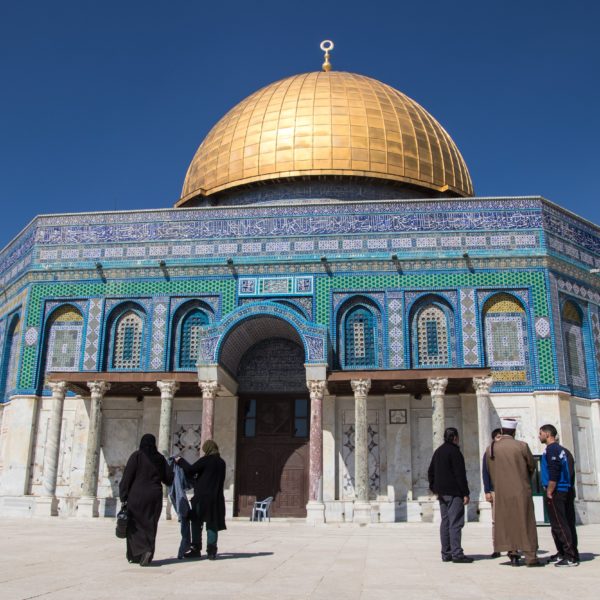
We successfully amended previous legislation in which the Israeli or Palestinian governments issued a veto. Additionally, we ratified the IPC Constitution. These are the amended legislation which passed: • Distribute Corona Virus vaccine in Israel the West Bank, Gaza and…
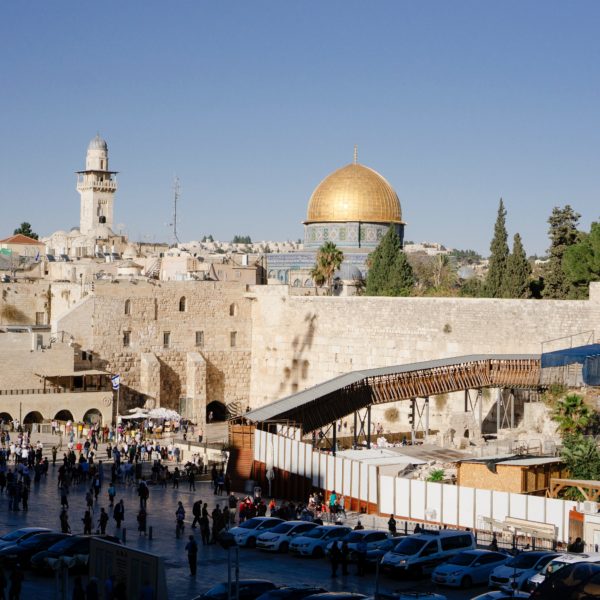
We gradually transitioned from easy to difficult as we debated 4 legislation. • Soccer tournament that combines Israeli and Palestinian teams – Passed by the IPC parliament without a veto. • Task force to improve construction standards in common areas of Israel…
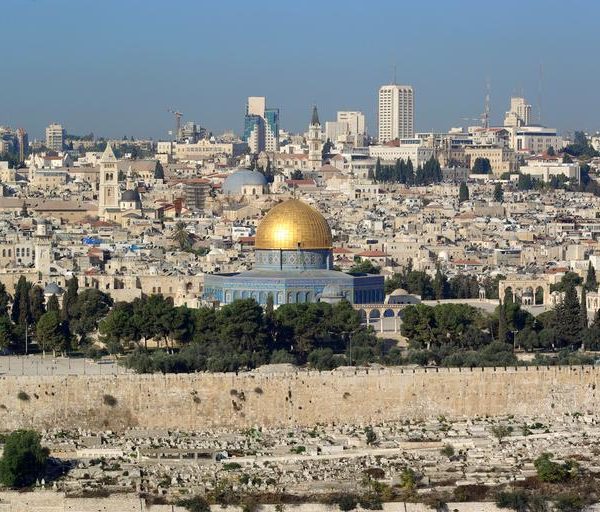
Summary of the February 24th simulation The IPC conducts regular and frequent zoom simulations to demonstrate how the Confederation would work. Most participants are asked to play Israeli and Palestinian parliament members in the Confederation. Others are asked to play Israeli…